Conversations on connection, community and what it means to be human.
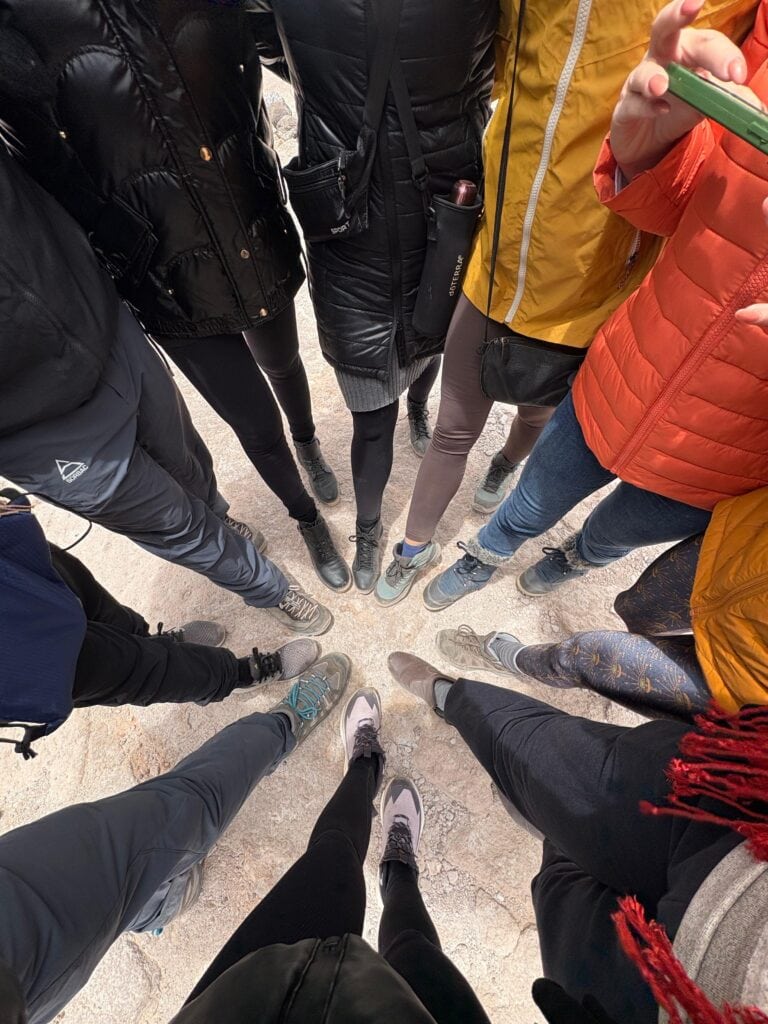
In recent years, the word community has been everywhere.
It shows up in marketing campaigns, corporate culture decks and, increasingly, in the branding of residential developments, especially here in places like Lake Nona. Everywhere you look, something is being called a “community.”
But the word itself has quietly drifted away from its original meaning.
What we often call a community today is, in practice, a collection of people who share a physical space or, at most, a few overlapping interests. But true community has never been about proximity alone. It’s about connection, collaboration, interdependence and care.
And those are the very things that seem to be missing.
In a real community, no one moves through life unnoticed. If someone is sick, everyone notices. If a parent is overwhelmed, someone offers help. If an elderly neighbor begins to decline, someone pays attention. There’s an unspoken awareness that we belong to something larger than ourselves.
It functions much like the human body: Each part has its role, but nothing operates in isolation. Everything depends on everything else.
What we’re building instead often looks very different.
We live side by side but not together.
Doors close. Security systems arm. Lawns are maintained with precision, but interaction is minimal. The systems in place are designed for order, not connection. HOAs enforce rules, what you can and cannot do, but rarely foster relationships. There is surveillance but not necessarily care. There is proximity, but not intimacy.
And the data reflects this shift.
According to a 2023 report from the U.S. Surgeon General, nearly 1 in 2 American adults report experiencing loneliness, with social disconnection now considered a public health concern comparable to smoking or obesity (HHS.gov). Even more striking, studies from Harvard’s Making Caring Common Project show that over 60% of young adults feel “serious loneliness” on a regular basis.
We are more connected than ever digitally, yet increasingly disconnected in real life.
What’s interesting is that, in earlier times, people didn’t need to label what they had as a “community.” It simply existed.
Villages, tribes and neighborhoods were built around necessity. People shared resources, tools, responsibilities and stories. Survival depended on cooperation.
Today, we live in material abundance but relational scarcity.
We have built walls to protect ourselves from external risks, yet in the process, we’ve lost touch with the people living just a few feet away. Many of us don’t know our neighbors’ names, let alone their lives.
So when we use the word “community” to describe clusters of well-designed homes, it often feels like something deeper is being projected: a quiet longing for what has been lost.
But longing alone isn’t enough.
Real communities aren’t created through marketing or branding. It’s built through behavior. Through small, consistent actions:
Checking in on someone.
Offering help without being asked.
Sharing what you have.
Creating moments of genuine presence.
These things can’t be mandated. They can only be chosen.
In many ways, returning to a more connected way of living may be one of the most powerful antidotes to the sense of emptiness and disconnection so many people feel today.
Because at its core, the community asks for something simple but not easy.
It asks us to open up and trust again.
To open up our doors.
To open up conversations.
To listen.
To let go of total independence and allow for mutual support.
And while that may feel unfamiliar in a culture that values autonomy and self-sufficiency, it is, in many ways, how we are designed to function.
If you look at the human body, arguably the most sophisticated system we know, it operates through cooperation. No cell exists for itself alone. Each one contributes to the well-being of the whole. When one part suffers, the entire system feels it. When one part thrives, everything benefits.
The same is true for us.
We all live in a community here in Lake Nona, but are we truly willing to act like one?