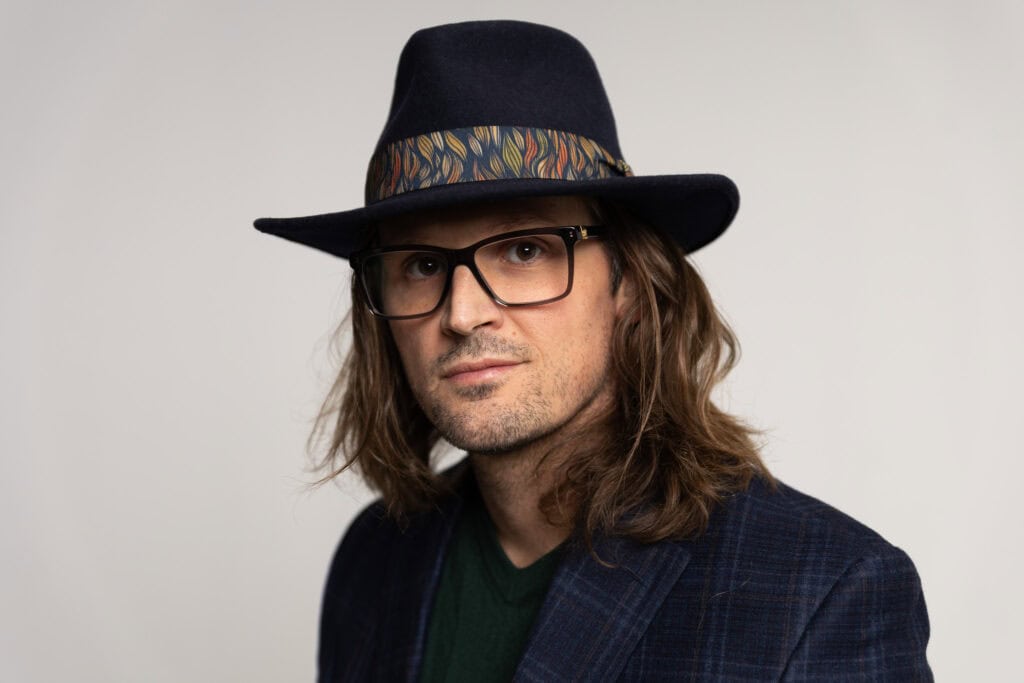
Nonahood News: Your career in healthcare and global pharmacy is quite different from fiction writing, what prompted the shift into storytelling?
Judd Midlam: Passion, really. I have always been writing, and writing, and writing. I think fiction is the most beautiful form of art and one of the best ways to connect with people. I write professionally in the pharmacy trade and had a prior novel published in 2018—it took thirteen years to write! The first draft of Syncope was done in 2023, so I am on a better trajectory now. Syncope is a story that captured so much of my own personal journey and what I could see taking place around me. It was a story that needed to be told. In that sense, I feel like I had no choice but to tell the story.
NHN: Do you see your writing as a continuation of your work in healthcare, or as a departure from it?
JM: I would say neither and both at the same time. Syncope is unique in that the story overlaps with my work as a pharmacist in so many ways. Every week, I get news highlighting which major pharma company has partnered with which major AI vendor to discover new drugs faster. And there’s a large volume of study behind neuroplastogens (drugs that rewire the brain). My work on Syncope started with a simple question—what does all that technology really mean for humanity, what’s the human experience?
NHN: How do you balance scientific accuracy with the creative freedom required for compelling storytelling?
JM: Balance is definitely the right word. I think for science topics, it has to be speculative fiction. Speculative fiction allows a writer to track through current science accurately, while having some flexibility to predict what’s coming next.
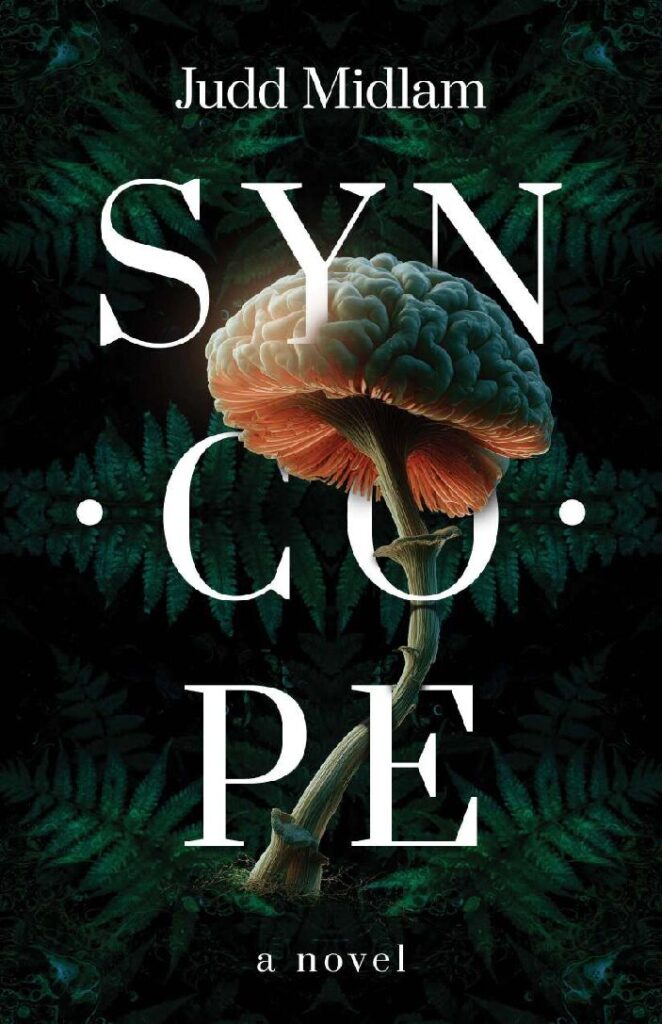
NHN: What was the most challenging aspect of writing your debut novel?
JM: Time management. I finished the first draft of Syncope almost three years ago and have been revising and fine-tuning ever since. In that same span of time, I’ve had four of those “Qualifying Life Events” that let you change insurance plans midyear. My consulting work is very much a full-time job too. It’s been a lot of 4am starts to get Syncope across the finish line. My wife is ready for me to have more free time.
NHN: Without giving too much away, what do you hope readers feel or question after finishing Syncope?
JM: When I started writing Syncope in 2023, I wanted the reader to ask—should we consider alcoholism a form of neurodiversity? That’s a provocative question I can’t answer in 300-pages. Today I am less interested in what labels exist and more so on how new treatments intersect with free will. There was big news in April that three psychedelic drugs could be approved for mental health ailments as early as this summer. The FDA announced clinical trials for a psychedelic plant found in an African shrub to treat alcohol use disorder. The value proposition for psychedelics in mental health comes from their ability to fix ‘faulty’ brain wiring. This science will move fast and I want readers to think critically about the promise—and limits—of medicine here.
NHN: How do you approach making complex ideas accessible without oversimplifying them?
JM: The biggest struggle for me is predicting which complex ideas are interesting to others or a total snooze fest! After that, I try to weave the ideas into real-world conversation and experience. In Syncope, there’s a discussion about global pharmaceutical patents. It takes place over eggs and toast at Hotel Unique in Sao Paulo, where weight loss drugs and soccer field investments are discussed. So it’s examples, imagery, and emotion.
NHN: Which authors or thinkers have most influenced your approach to blending science and literature?
JM: With writing Syncope, I returned to an old favorite of mine—the PiHKAL and TiHKAL books (Phenethylamines, and Tryptamines I Have Known And Loved), respectively. Those are incredible works that catalogue very deep pharmacology concepts into a digestible format. Dean Buonomano does a great job distilling neuroscientific topics into a fun read. I haven’t found a lot of literature that addresses contemporary pharmaceutical science—but hopefully that changes!
NHN: What surprised you most about yourself during the process of writing this novel?
JM: The power and responsibility of words. This book touches on very personal and emotionally charged topics. It follows the rise and fall (Syncope is fainting from standing up too fast) of someone overcoming alcoholism. We all know people who have struggled with addiction. I had to keep the writing true to the emotional weight it deserves while understanding that some people could find the story helpful and others could find it jarring.
NHN: Is Syncope the beginning of a larger body of work exploring similar themes?
JM: I hope so. We will start to see a couple of things come to fruition in the next 5-10 years: advances in AI will impact our understanding of the brain and neurobiology, psychedelic drugs will be formulated to cause brain rewiring without the hallucination, and some of these advances will be focused on fixing the addicted brain. We have to think about what that means, from a societal perspective. If you consider the GLP-1 drugs (which are also being studied for alcoholism); these reached the market for treating obesity in the past three years. During that time, medical practice has moved obesity from personal choice to clinical diagnosis, with treatments available. I suspect alcoholism will follow the same trajectory as therapies become available—less a moral failing and more a treatable condition.
NHN: Are there other ideas or stories you’re eager to explore next?
JM: I’m taking a small break after Syncope is published. Then I may dust-off a novella that has been sitting on my shelf.
With the book set to release July 4th, 2026, Judd Midlam is excited to share this new chapter with readers both locally and beyond.
More information about the release, upcoming events, and the author’s work can be found on their website: https://cjmidlam.com




I really enjoyed this article and will purchase this book. I too am a writer/storyteller writing fiction. Thank you for writing this article and for promoting your book within the Nonahood Community.