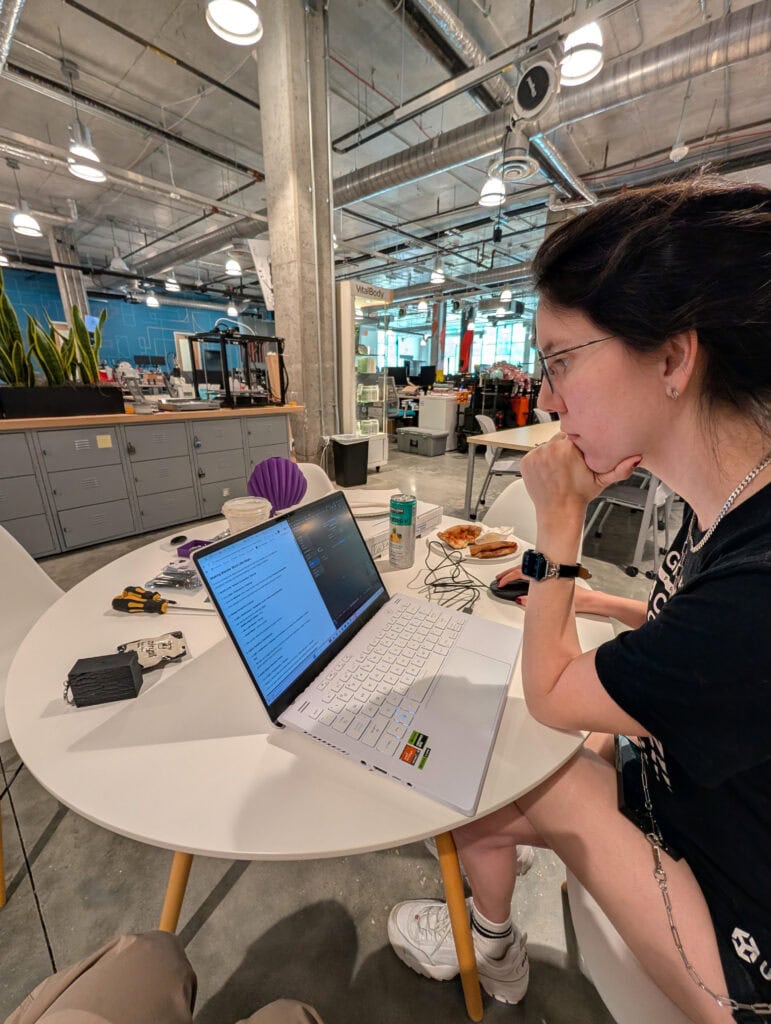
A few months ago, Instagram decided I was interested in cyberdecks, and honestly, it wasn’t wrong.
My feed slowly filled with people building handheld computers that looked like they had pulled out of a science fiction movie. Every project was completely different. Some were built into old radios. Others looked like vintage cameras or weathered field equipment. But the ones I kept coming back to were made by women who were designing technology that felt deeply personal. Instead of treating the enclosure as an afterthought, they were building computers shaped like compact mirrors, purses, seashells, and all kinds of whimsical objects.
I loved that. It reminded me that technology doesn’t have to look the same to be impressive. It can have personality. It can reflect the person who made it. Somewhere between saving way too many posts for “future inspiration” and falling down the rabbit hole of cyberdeck videos, I decided I wanted to build one of my own. There was just one small problem. I had never built a computer before.
My background is in conservation biology. I’m much more comfortable talking about ecosystems than circuit boards. If you had handed me a Raspberry Pi a few months ago, I probably could have identified the USB port and then started guessing. So that’s exactly where I started.
One thing I love about the maker community is that nobody expects you to know everything before you begin. The Raspberry Pi has become the gateway into electronics for so many people because it’s affordable, well documented, and supported by thousands of tutorials. It felt like the perfect place to learn, and before long I had a tiny computer sitting on my desk with wires running in every direction.
The project quickly grew into something I call CloudShell.
I imagined opening a small, sparkly, seashell shaped device and pointing it at airplanes flying through the sky. Then something like a little pearl telling you where the flight came from, where it was going. A little peak into what’s going on in the sky above. So, using a Raspberry Pi, a GPS chip, an orientation sensor, and live flight information, I started making a device that figures out which airplane you’re looking at and displays information about that flight on a little round screen. I even added buttons! If you press the center button, labeled GOTCHA, it saves that airplane into your own collection. Think of it as a plane spotter’s version of a Pokedex.
When no planes are overhead, the screen simply shows a little gif clouds drifting across the display. It’s wonderfully unnecessary, completely mine, and that’s my favorite thing about it. Nobody asked me to build a tiny seashell that catches airplanes. There’s no business plan behind it. It’s just an idea that makes me smile, and sometimes that’s enough reason to make something.
As the project has grown, so has the list of things I’ve had to learn. Electronics. Embedded programming. GPS modules. Orientation sensors. Making my own 3D print model. Designing around batteries and tiny screens. Every time I think I’ve reached the finish line, I discover another skill waiting around the corner.
It’s honestly addictive.
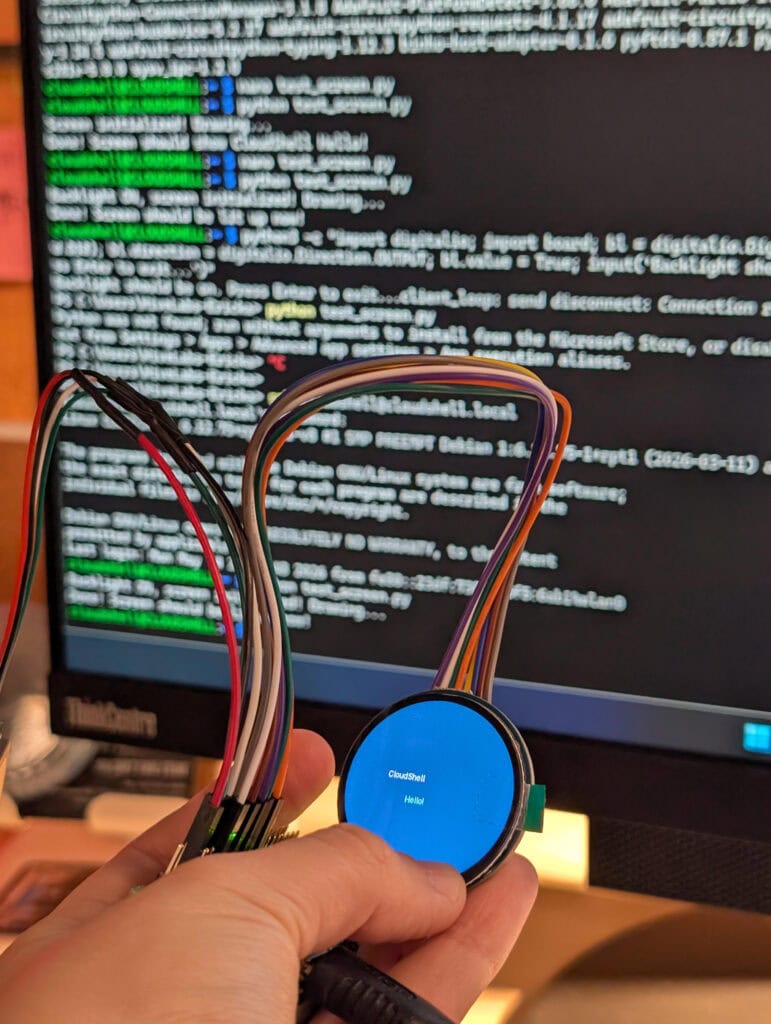
One of my favorite moments so far was seeing the little round display come to life for the first time. After spending what felt like forever connecting wires and checking pin diagrams, the screen lit up with the words “CloudShell Hello!” It wasn’t much, but it felt like a huge milestone. It was proof that all those little pieces were finally starting to work together.
The funny thing is that I don’t feel like I’m building this project alone. Friends are helping turn my sketches into printable models. Other makers have answered questions when I’ve inevitably gotten stuck. Online communities have documented problems that saved me hours of frustration. Making has always been collaborative. The tools have just changed.
Working on CloudShell has also reminded me why I enjoy spending time at HiveLabs. People often assume a makerspace is full of experts. It really isn’t, it’s full of people learning. Someone is using a laser cutter for the first time. Someone else is figuring out woodworking. Across the room another person is teaching themselves CAD, while someone nearby is repairing a piece of vintage electronics that most people would have thrown away.
Nobody has permission to know everything. Everyone has permission to try.
I think that’s part of what drew me to the cyberdeck community in the first place. Every project feels like a reflection of the person who built it. There isn’t one correct design or one correct purpose. They’re little snapshots of curiosity. Mine just happens to look like a glittery blue seashell.
Technology doesn’t have to disappear into the background. Sometimes it can be expressive. Sometimes it can be beautiful. Sometimes it can simply be fun. CloudShell still isn’t finished. There are sensors to wire, code to debug, and plenty of mistakes left for me to make. But somewhere along the way, this project stopped being about building a cyberdeck. It became about remembering how rewarding it is to be a beginner.



Leave a Reply